


-
ꀇ
Home
-
About us
-
Products
- Photomultiplier Tube Series
- Photomultiplier tube
- PMT Module
- MCP-PMT
- Radiation Detector
- CZT Detector
- PIPS Detector
- Scintillation Detector
- Micromegas Detector
- Electronics
- Multi-channel analyzer
- Preamplifiers/Socket Electronics
- Pulse Processing Chip
- Spectrometer System
- SiPM products
- Si-Photomultiplier(SiPM)
- SiPM Array
- SiPM Assembled Detector
- Scintillation Crystal
- Equipment
-
Service
-
News
-
Contact us
-
ꀇ
Home
-
About us
-
Products
- Photomultiplier Tube Series
- Photomultiplier tube
- PMT Module
- MCP-PMT
- Radiation Detector
- CZT Detector
- PIPS Detector
- Scintillation Detector
- Micromegas Detector
- Electronics
- Multi-channel analyzer
- Preamplifiers/Socket Electronics
- Pulse Processing Chip
- Spectrometer System
- SiPM products
- Si-Photomultiplier(SiPM)
- SiPM Array
- SiPM Assembled Detector
- Scintillation Crystal
- Equipment
-
Service
-
News
-
Contact us
CdZnTe Detectors
-
-
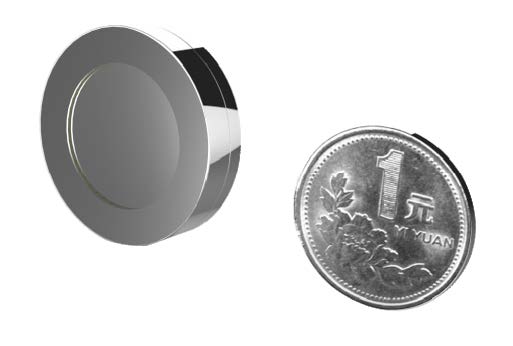
DT-P02/P02R α-ray Spectrum Detector
The α-ray detector is based on CZT technology, it has a high energy resolution to α-ray. It is cleanable.
and able to work under visible light.¥ 0.00Buy now
-
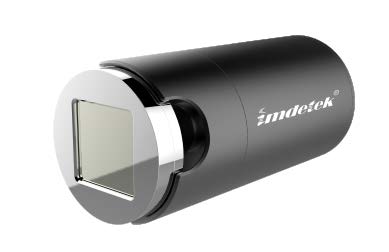
PDT-01A1/01A1R α-ray Spectrum Probe
PDT-01A1 is a probe based on CZT α-ray detector. It has a high energy resolution to α-ray.¥ 0.00Buy now
-
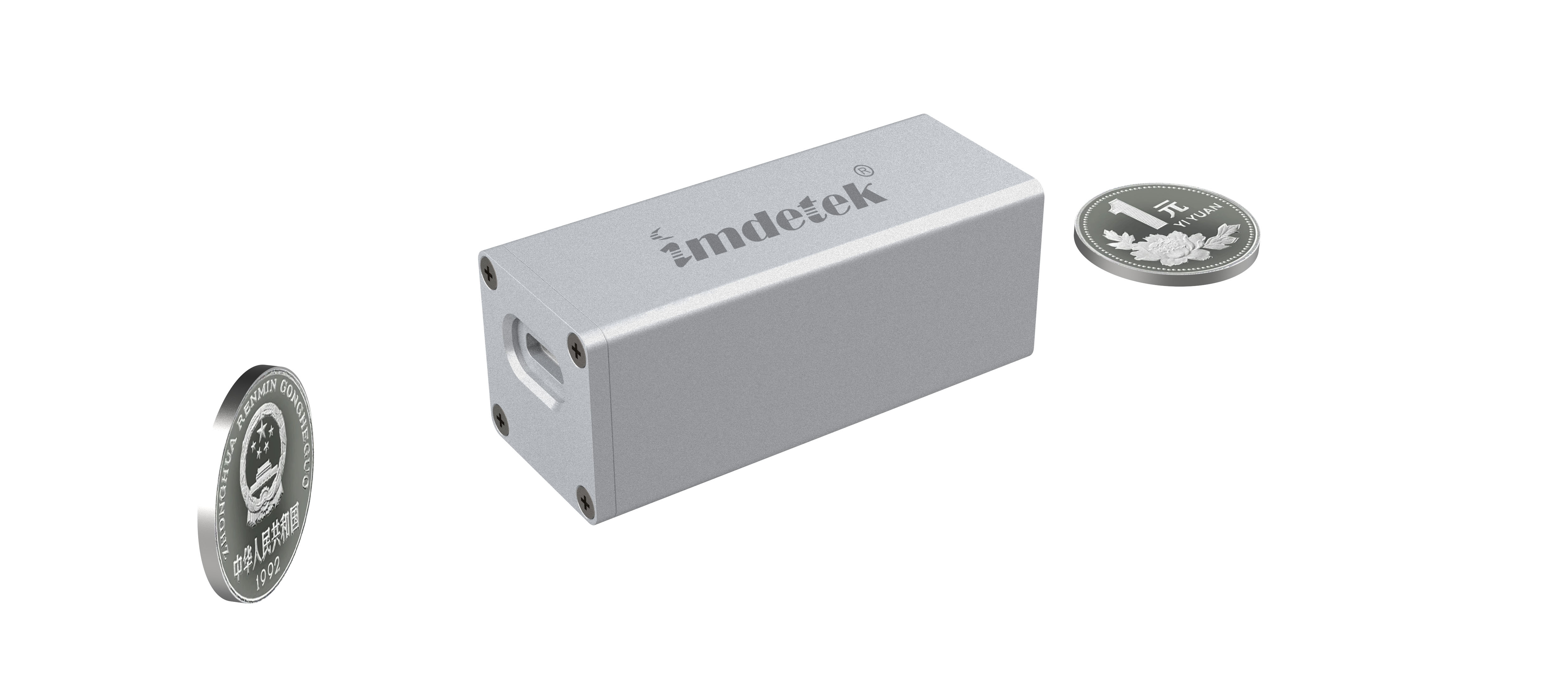
CZT-MPES-01A Micro Spectrum Device
The CZT-based micro-spectrum device is compact. It integrated CZT detector, pre-amplifier,
shaping circuit, multi-channel analyzer, and high-voltage power supply. It can read out the
spectrum directly. With the nuclide librar software, it can tell the nuclide.¥ 0.00Buy now
-
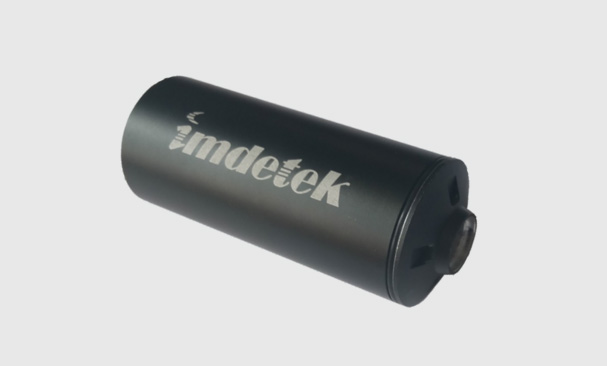
DT-01C1 High Energy Resolution Probe (Asymmetry)
CZT detector¥ 0.00Buy now
-
DT-01A High Energy Resolution Probe (Planar)
DT-01A probe is based on CZT planar detector technology, it is sensitive to low energy radiations.
You can use it for spectrum analysis, dosimeter, thickness test and others.¥ 0.00Buy now
-
-
 您还没有选择分类数据,请先选择数据
Cadmium zinc telluride (CZT) single crystals, composed of a ternary system of Cd, Zn, and Te, are among the best-performing semiconductor materials for room-temperature nuclear radiation detection. From a materials science perspective, CZT single crystals are a type of solid solution that evolves from CdTe crystals. CdTe can be considered a face-centered cubic structure composed of Cd atoms, with a Te atom face-centered cubic nested within it by translating along the body diagonal direction by one quarter of the diagonal length. By replacing some of the Cd atoms with Zn atoms, CZT single crystals are formed, meaning CZT is a solid solution formed by CdTe and ZnTe. The solubility is usually represented by the subscript x, that is, Cd1-xZnxTe. There are two common values of x: when x=0.04, the lattice constant of CZT perfectly matches that of the infrared detection material mercury cadmium telluride (MCT), making it an excellent infrared detector epitaxial substrate; when x=0.1, it is considered detector-grade CZT.
Semiconductor detectors typically operate based on the photoelectric effect, where photons striking the semiconductor cause the ionization of electrons within the semiconductor, forming electron-hole pairs, or non-equilibrium carriers. Under the influence of an applied bias voltage, these carriers drift towards the detector electrodes, generating an electrical signal. By amplifying this signal, photon detection can be achieved. Unlike traditional scintillator detectors, semiconductor detectors work by directly converting light into electrical signals, a process known as direct conversion. In contrast, scintillator detectors usually convert high-energy light signals into visible light signals, which are then converted into electrical signals by a photomultiplier tube or a visible light detector, a process known as indirect conversion. Therefore, generally speaking, semiconductor detectors are more efficient and sensitive compared to scintillator detectors.
The working principle of Cadmium Zinc Telluride detector


